Driveway Cleaning Hudson, OH: Remove Algae & Moss
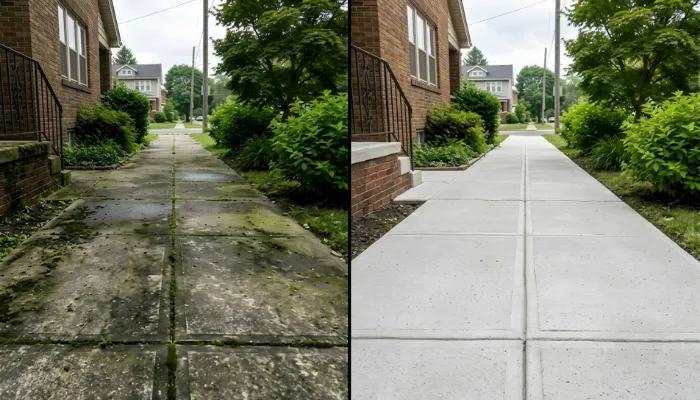
Green concrete is usually a moisture problem. A pressure washer can remove the visible growth, but pressure alone doesn’t address why it formed, or whether it will come back.
In Hudson and across Northeast Ohio, shade, humidity, leaf litter, and slow-drying concrete give algae and moss plenty of opportunity to settle in. The fix is to treat the growth first, then clean the surface carefully.
What You’re Looking At
Not every dark mark is the same thing.
Green film or slippery patches: Often algae, sometimes mixed with mildew.
Fuzzy growth in joints and cracks: Commonly moss. It holds on where moisture and bits of organic debris collect.
Black or dark streaks: Often mildew mixed with airborne dirt. Lichen or other embedded staining can also look dark.
That last category matters. Oil, rust, and tire marks aren’t algae. They may need a different treatment. If you use the wrong cleaner, you can spend time and effort without improving the stain.
Why It Grows Around Here
Northeast Ohio gives concrete plenty of wet stretches. The GLISA regional climate overview describes a region with precipitation throughout the year and seasonal temperature swings.
Add a few common yard conditions and the concrete stays damp longer:
Heavy tree canopy blocks sunlight and slows drying.
The north side of a house often gets less direct sun.
Leaves, grass clippings, and mulch hold moisture against the slab.
Sprinklers can keep the same edge wet day after day.
Low spots and poor drainage leave water sitting after rain.
The growth usually shows up where those conditions overlap. Check shaded edges, joints, the bottom of a slope, and the strip beside landscaping.
It’s Not Just About Appearance
Green growth and moss can make concrete slick, especially on a slope, walkway, or step. That’s a practical problem when you’re carrying groceries or walking outside after rain.
Growth and debris also keep surfaces damp. In winter, that moisture can freeze and thaw in the concrete’s pores and joints. Repeated freeze-thaw cycles can contribute to deterioration over time, particularly where concrete is already weak or damaged. Cleaning won’t repair cracks or restore a surface that’s scaling, but leaving growth and damp debris in place doesn’t help.
There’s another clue worth noticing: if the same patch turns green again quickly, cleaning may not be the main issue. Persistent shade, sprinkler overspray, or drainage can keep feeding it.
Why Blasting It Isn’t the Whole Answer
A narrow, close-range jet can strip off the visible layer while leaving some growth behind. It can also push dirty water and loose material across the slab, into joints, or onto nearby surfaces.
And too much pressure can mark concrete. A concentrated nozzle held too close may etch the surface or loosen already weak, flaking material. Older concrete and exposed aggregate need extra care.
That’s why “more pressure” isn’t a treatment plan. The right approach is to treat the growth first, allow the product time to work, and then clean and rinse with controlled equipment.
A Careful Cleaning Process
Whether you’re cleaning a driveway, patio, or walkway, the order matters:
Clear the surface. Move furniture and vehicles. Sweep leaves and loose debris instead of washing them into the street.
Choose a cleaner labeled for the growth and surface. Follow its directions, including any testing, protective equipment, and dwell-time instructions.
Apply in manageable sections. Give the product the time stated on its label. Don’t let it dry unless the directions specifically say that’s acceptable.
Agitate where needed. A stiff, non-wire brush can help with stubborn growth in joints. Don’t scrub so aggressively that you damage the concrete.
Surface clean and rinse thoroughly. Use equipment suited to the condition of the slab. Avoid holding a narrow, high-pressure stream close to one spot.
Check the result once the surface dries. Some dark marks may be embedded staining, not remaining growth. Don’t keep escalating the pressure to chase a stain that needs a different treatment.
For a DIY job, work on a calm day and keep people and pets away from the work area while products are in use. Read the product label before you start.
Safety matters: Never mix cleaning products. In particular, never combine bleach with ammonia, acids, vinegar, or another cleaner. Mixing can release dangerous gases.
Keep cleaning products and contaminated rinse water off the lawn and out of storm drains. Don’t wash them into the street. Follow the product label and local requirements for managing wastewater; the Ohio EPA’s power-washing guidance explains why wash water and runoff need attention.
Protect the Plants While You Work
Cleaning the concrete shouldn’t mean scorching the flower bed beside it.
Pre-wet nearby plants with clean water before applying cleaner.
Cover sensitive plants or anything you can’t move.
Work in small sections so you can control the application and rinse.
Keep product off the lawn, foliage, and storm drains.
Rinse nearby plants with clean water afterward.
If wind is carrying spray toward landscaping, wait for better conditions. If you can’t control where the cleaner and rinse water go, don’t proceed with that setup.
What Slows the Return
Cleaning removes growth. These steps address the conditions that encourage it:
Move leaves and mulch off the concrete. Don’t let damp organic debris sit against the slab.
Fix the water source. Adjust sprinkler heads and direct downspouts away from the driveway where practical.
Improve drainage. Persistent puddles keep the same patch wet. Cleaning won’t correct a low spot or a drainage problem.
Reduce nearby shade where reasonable. Selective trimming may help a shaded edge dry faster.
Clean regularly. It’s easier to remove light growth than a thick, established layer.
Consider sealing once the concrete is clean and completely dry. A penetrating sealer can reduce how much water soaks into concrete. It won’t stop shade, eliminate standing water, or prevent all future growth.
Sealing is protection, not a cure for drainage or heavy shade. We use a penetrating sealer that leaves the concrete’s appearance unchanged. You can read more about driveway cleaning and sealing.
When to Call Someone
If the concrete is flaking, soft, badly cracked, or covered in growth that returns soon after cleaning, get the surface assessed before turning up the pressure. The cause may be ongoing moisture, a damaged slab, or staining that needs a different treatment.
For driveway cleaning in Hudson, Ohio, the job is to clean concrete without pretending every mark can be erased. We specialize in driveways and also offer patio cleaning services. For pressure washing in Hudson, OH, check the scope and price before you book. Our pricing is posted online, so you can compare the service and decide without a sales visit.
Clean growth the right way. Keep water moving. Don’t let a green patch become a slippery one.